

Our architecture interacts with history and memory, welcoming diversity, and combines structural and construction systems to create spatial compositions that celebrate cultural hybridity and multiplicity in all its forms.
Mikoü Architecture’s practice is grounded in an Atlas of Resonance: a design method that reads each territory through its visible and invisible layers—geology, climate, resources, memory, cultural narratives, patterns of use, craft knowledge and collective imaginaries.
These layers become active forces in shaping architecture. They inform structure, materiality, light, thresholds, repetition, spatial sequences and modes of assembly.
Each project thus forges a relationship between what is already there and what may yet take form.


Manufacture of Architecture
We define Mikoü as a Manufacture of Architecture. Each architectural project is conceived as a continuous process integrating design, engineering, research, prototyping, fabrication and construction. This approach leads us to collaborate with engineers, industrial partners, craftspeople and manufacturers from the earliest stages, so that the logic of construction becomes a source of form, use, precision and meaning, rather than a technical question to be resolved later.
Prefabrication, dry assembly, off-site construction, reversibility, material efficiency, local resources, bio-based and earth-derived materials, and expert craftsmanship constitute a shared field of experimentation. The aim is not industrialisation for its own sake, but the capacity to create architecture that is more resource-efficient, more precise, more adaptable and deeply rooted in place.
Mikoü Architectures is an international practice founded by award-winning architects Selma and Salwa Mikou, two French-Moroccan women architects, born in Fez, Morocco. Our office is a space dedicated to creativity and experimentation, exploring architecture and its various intersections.


Mikoü Architecture is an international architectural practice founded in Paris by Salwa and Selma Mikoü. Its work lies at the intersection of culture, construction and material research. Each project begins with a reading of the territory-its geology, layers of memory, narratives, resources and craft knowledge-and translates these findings into spatial, structural and construction systems.
Matter is understood as a repository of memory. Earth, clay-based concrete, timber, glass, metal, stone and reclaimed materials are selected not only for their performance, but also for what they reveal of a place, its craft traditions, the qualities of its light and its building culture.
In recent years, the practice has pursued cross-disciplinary research, bringing together engineers and industrial partners to examine the history of prototypes and pioneering architectural experiments in relation to the major industrial innovations of the twentieth century. This research explores how prefabrication and assembly can underpin an ecologically grounded, low-carbon approach to construction.
Through a transdisciplinary approach to design, Mikoü Architecture brings together technological innovation, bio-based materials and craft expertise to develop alternative models of construction across a range of programmes: hotels, spas and wellness facilities; residential developments and condominiums; workshops and manufacturing facilities; educational campuses and cultural buildings.
Salwa and Selma Mikou, a duo of Arab women, are two French-Moroccan architects born in Fez, Morocco.
They are deeply engaged with contemporary vernacular architecture. They seamlessly blend diverse cultures and a combination of raw and refined materials, embodying their vision of an inclusive and multicultural modern city.

Salwa and Selma Mikou
Salwa and Selma Mikoü are French–Moroccan architects, twin sisters born in Fez, Morocco, and founders of Mikoü Architecture, a Paris-based practice at the intersection of architecture, cultural narratives and material research. They founded the studio in 2008 after working respectively at Ateliers Jean Nouvel and Renzo Piano Building Workshop. From 2016 to 2018, they led Intermediate Unit 16 at the Architectural Association School of Architecture in London.
Rooted in France and Morocco, the practice brings the intelligence of craft into dialogue with the demands of complex public programmes. For Mikoü, every site contains traces, resources and collective imaginaries that can become active materials for design.
Their Atlas of Resonance is a way of reading territories through memory, local narratives, geology, climate and craft traditions. Construction is understood as a form of writing — one that articulates relationships, makes latent structures legible and engages with the cultural depth of a place.
They define their practice as a Manufacture of Architecture, in which technology and craftsmanship converge through a Poetics of Assembly. Prefabrication, dry construction, craft knowledge and off-site processes are approached not only as construction strategies, but as cultural and social acts that bring different histories, identities and forms of knowledge into relation.
Built works include Aquazena, a swimming pool and wellness centre in Greater Paris; Balsanéo, an Olympic aquatic centre and spa in Châteauroux; the Simone Veil School Campus in Boulogne-Billancourt; a residential tower in Nanterre; and the transformation of the former studio of Yves Saint Laurent and Pierre Bergé in Paris. Current projects include Art de Rives, a mixed-use development along the Garonne in Bordeaux; a cultural campus within rehabilitated industrial halls in Casablanca; a museum park in Normandy; and a metalworking facility for Hermès in Champigny-sur-Marne.
Salwa and Selma Mikoü also lecture internationally.
We operate in a workshop environment, collaborating with a multidisciplinary team of architects, engineers, graphic designers, scenographers, and urban planners, all from diverse cultural backgrounds.
Their contributions are key to our success:
Alexandre CarpentierFR
Anna BakhlinaRU
Antoine ThierryFR
Arom JeongKR
Barbara StefanES
Benoit RozeFR
Caterina GattiIT
Caterina SovaniIT
Cecile JalbyFR
Celine KerleviouFR
Charlotte PerdriauFR
Charlotte RambozFR
Chiara FossatiIT
Dan RopertFR
Davide PersantiIT
Deredita SimoneIT
Diana AlmeidaPT
Doria DoubalLB
Eliseo D'AlonzoIT
Felipe GariIT
Gabriel HelouLB
Iskra PenchevaFR
Jaebum ParkKR
Javier Cuenca SolanaES
Jean-Loup BaldacciFR
Jacques BindelFR
Joana FigueiredoPT
Jordan MartiniFR
Myriam ElgadiMA
Manuela FofanaFR
Miguel ValencaPT
Monya MayFR
Miyuki DurandJP
Pierre MuraFR
Robert GrimmDE
Salwa MikouFR
Selma MikouFR
Sandro ToniettiIT
Taoufik LawraniMA
Amine RadiMA
Our projects are rooted in the local context, reactivating memories by blending vernacular traditions with cutting-edge technology, both in space and material.
Books

Book
2023
Quart Verlag
Quart éditions, De aedibus international

Book
2022
Inhabiting the Desert: Boucraa, an Invisible City

Book
2025
Water temples
Edited by Mikoü

Research
2017
AA Book 2017
Press
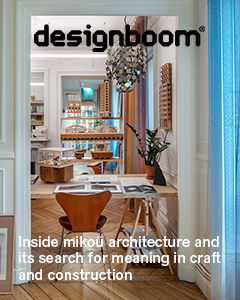
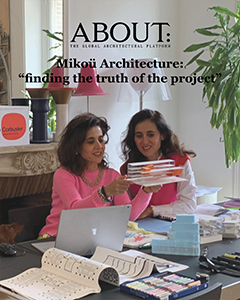
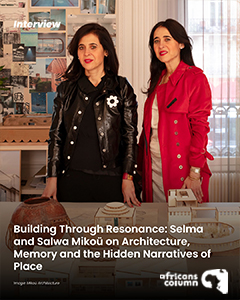
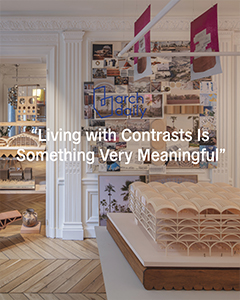
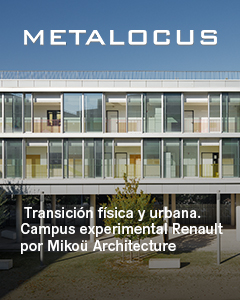
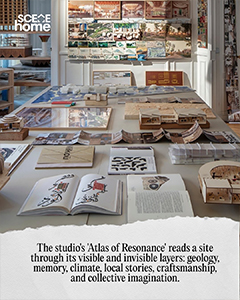
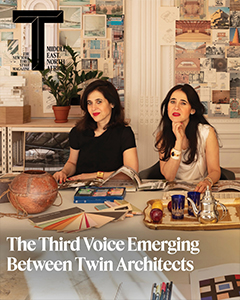
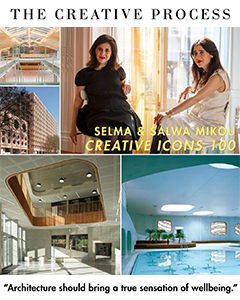
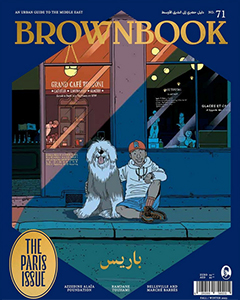


Our work reflects a deep commitment to functional design, a holistic approach to material and space, and a pursuit of creative and technical excellence that ensures both durability and beauty.
Laureate
2024
Arte tv metropolis
Portrait of Mikou Studio
Laureate
2024
Prix accélérateur architecture et design
Ministry of Culture
Laureate
2023
Prix aedibus international
Architect's Monograph
Laureate
2018
Golden Isséen Award
Aquazena Swimming Pool and Sports Center, Issy-les-Moulineaux, France
Laureate
2018
Fimbacte Award
Jean-Lurçat Middle School, Saint-Denis, France
Laureate
2018
Archi Design Club Award
Best Educational Building – Jean-Lurçat Middle School
Laureate
2017
Silver Trophy for Living Environment
Feng Shui Swimming Pool, Issy-les-Moulineaux
Nominated
2016
ArcVision Prize
International Social Award for Women Architects
Laureate
2014
Participation in the Morocco Pavilion
Venice Biennale 2014, Fundamentals
